


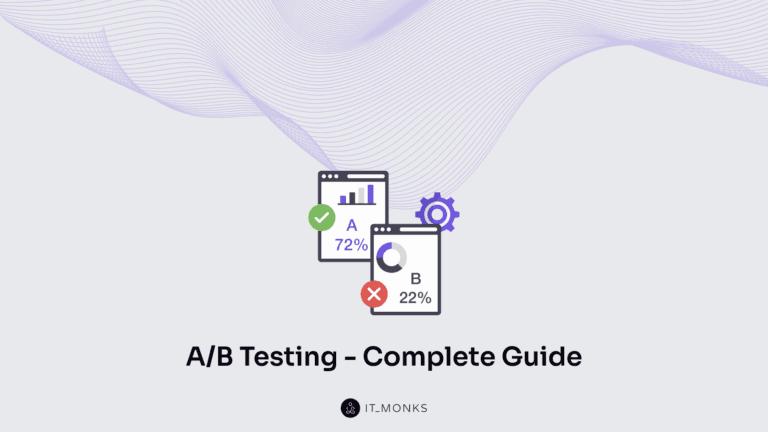
A/B testing compares two versions of a WordPress website to determine which performs better. It enables controlled exposure of different…
Learn more 
IT Monks delivers custom design and development solutions for media and publishing websites.
We focus on fast content delivery, flexible editorial workflows, multi-format publishing, and audience engagement at scale, with each project supporting dynamic content, monetization models, and integration with analytics and advertising platforms.






Each website developed by IT Monks is equipped with features specifically tailored for the media and publishing industry. No off-the-shelf templates. Only purpose-built functionality designed to meet the complex demands of digital publishers and ensure long-term scalability and operational efficiency.

Publishing teams move fast, but the website often slows everything down. A simple homepage update, article layout change, or special feature page turns into a developer task. Editors wait in queues, content calendars slip, and time-sensitive stories lose momentum before they even go live.

Editors can build, update, and publish content without relying on developers for every change.
Reusable blocks and modular layouts make it easier to launch articles, landing pages, special editions, and sponsored content much faster. The setup also supports:

Requirements around accessibility, data protection, and regional regulations are often only partially covered. This creates legal risk, limits access for some users, and makes it harder to operate across different markets.

Accessibility standards and compliance requirements are built into the platform from the start. This includes WCAG alignment, European Accessibility Act (EAA), and security measures that protect user data and ensure safe interactions across the platform.
Publishing platforms often rely on traffic alone without fully using the revenue potential of their content. Sponsored articles, memberships, subscriptions, gated content, and advertising workflows are either disconnected or difficult to manage, which limits monetization opportunities.
The platform supports multiple monetization models directly within the publishing workflow. Subscriptions, paywalls, sponsored content, membership access, and advertising placements can all be managed in one ecosystem without relying on disconnected tools.

Publishing platforms often attract readers from different countries, but the content experience remains limited to a single language or region. International readers struggle to navigate the site, consume content comfortably, or engage with newsletters and subscription flows.

Content can be managed and published across multiple languages and regions from a single platform. Readers access content in their preferred language, while editorial teams maintain consistent publishing workflows across regional editions and markets.

Editorial teams, writers, editors, marketers, and administrators often work inside the same system without clearly separated permissions. This creates unnecessary risk. Content gets edited accidentally, publishing workflows become harder to manage, and teams spend extra time manually coordinating access.

Each team member gets access based on their role and responsibilities. Writers can create drafts, editors manage reviews and publishing, marketers handle promotional content, and administrators control platform-level settings.

Editorial teams publish constantly, but it’s often unclear what actually performs. Without proper tracking, decisions are based on assumptions rather than actual reader behavior. It becomes difficult to understand which stories keep attention, where readers drop off, what drives subscriptions, or which content formats perform best.

Detailed reporting shows how readers move through the site, what content keeps engagement high, and where attention starts to fade. Teams can track article performance, subscription flows, scroll depth, traffic sources, and audience behavior in one place.

Readers come to publishing platforms looking for specific topics, authors, stories, or keywords, but search often struggles to surface the right content. Older articles disappear in archives, filters feel limited, and relevant content gets buried under newer posts.

Search is structured around how readers actually look for content. Articles can be surfaced by topic, keyword, category, author, tag, or publication date, making large content libraries easier to navigate.
Publishing teams move fast, but the website often slows everything down. A simple homepage update, article layout change, or special feature page turns into a developer task. Editors wait in queues, content calendars slip, and time-sensitive stories lose momentum before they even go live.
Editors can build, update, and publish content without relying on developers for every change.
Reusable blocks and modular layouts make it easier to launch articles, landing pages, special editions, and sponsored content much faster. The setup also supports:
Requirements around accessibility, data protection, and regional regulations are often only partially covered. This creates legal risk, limits access for some users, and makes it harder to operate across different markets.
Accessibility standards and compliance requirements are built into the platform from the start. This includes WCAG alignment, European Accessibility Act (EAA), and security measures that protect user data and ensure safe interactions across the platform.
Publishing platforms often rely on traffic alone without fully using the revenue potential of their content. Sponsored articles, memberships, subscriptions, gated content, and advertising workflows are either disconnected or difficult to manage, which limits monetization opportunities.
The platform supports multiple monetization models directly within the publishing workflow. Subscriptions, paywalls, sponsored content, membership access, and advertising placements can all be managed in one ecosystem without relying on disconnected tools.
Publishing platforms often attract readers from different countries, but the content experience remains limited to a single language or region. International readers struggle to navigate the site, consume content comfortably, or engage with newsletters and subscription flows.
Content can be managed and published across multiple languages and regions from a single platform. Readers access content in their preferred language, while editorial teams maintain consistent publishing workflows across regional editions and markets.
Editorial teams, writers, editors, marketers, and administrators often work inside the same system without clearly separated permissions. This creates unnecessary risk. Content gets edited accidentally, publishing workflows become harder to manage, and teams spend extra time manually coordinating access.
Each team member gets access based on their role and responsibilities. Writers can create drafts, editors manage reviews and publishing, marketers handle promotional content, and administrators control platform-level settings.
Editorial teams publish constantly, but it’s often unclear what actually performs. Without proper tracking, decisions are based on assumptions rather than actual reader behavior. It becomes difficult to understand which stories keep attention, where readers drop off, what drives subscriptions, or which content formats perform best.
Detailed reporting shows how readers move through the site, what content keeps engagement high, and where attention starts to fade. Teams can track article performance, subscription flows, scroll depth, traffic sources, and audience behavior in one place.
Readers come to publishing platforms looking for specific topics, authors, stories, or keywords, but search often struggles to surface the right content. Older articles disappear in archives, filters feel limited, and relevant content gets buried under newer posts.
Search is structured around how readers actually look for content. Articles can be surfaced by topic, keyword, category, author, tag, or publication date, making large content libraries easier to navigate.
The IT Monks team has over 16 years of experience in media website development, with more than 160 successfully delivered projects in the publishing sector.
Focused on the needs of media businesses, the team provides end-to-end website development that covers strategy and design, engineering, and optimization.


IT Monks builds media websites as centralized operational hubs, ready to integrate seamlessly with a wide range of third-party services.
Every integration is configured to streamline workflows, enhance performance, and support growth across editorial, marketing, monetization, and compliance operations.
Our team integrates performance enhancers like Cloudflare, Fastly, and Akamai to ensure reliable speed and uptime. Image optimization tools such as ShortPixel and WebP converters further improve load times and visual performance.
We connect websites with engagement platforms, such as Disqus and Facebook Comments, for community interaction. Push notification tools such as OneSignal and PushEngage, along with interactive content services like Outgrow and Typeform, help drive repeat visits and user participation.
The team ensures seamless integration with leading email marketing tools, including Mailchimp, ConvertKit, and Sendinblue, enabling smooth subscriber management and campaign automation.
Each website developed by IT Monks is equipped with features specifically tailored for the media and publishing industry. No off-the-shelf templates. Only purpose-built functionality designed to meet the complex demands of digital publishers and ensure long-term scalability and operational efficiency.
Websites can be connected to various advertising and affiliate platforms, including Google Ad Manager, Prebid.js, OpenX, Taboola, Outbrain, Impact, and CJ Affiliate.
The team enables powerful internal and external content discovery through integrations with Algolia, ElasticSearch, and various news syndication APIs.
IT Monks integrates analytics platforms, including Google Analytics (GA4), Matomo, and Mixpanel, for performance tracking. The setup also includes A/B testing and behavior analytics tools such as Hotjar, Crazy Egg, VWO, and Optimizely.
Websites are prepared to stream or embed content using platforms like YouTube, Vimeo, JW Player, and CDN-based video streaming services, ensuring high-quality delivery at scale.
To support privacy regulations, IT Monks integrates trusted tools like Cookiebot and OneTrust for cookie consent and data compliance management.

In 2024, IT Monks earned the status of WordPress VIP Partner — an honor granted to agencies that consistently deliver top-level WordPress solutions built for performance, security, and scale.
This milestone reflects deep expertise in enterprise-level WordPress development and a proven track record of launching and maintaining complex, global websites. Whether building multilingual platforms, custom features, or headless architectures, the team delivers future-ready solutions tailored to real business needs.
As a WordPress VIP-recognized agency, IT Monks adheres to the highest standards of speed, security, and reliability, ensuring that every website operates seamlessly, even under the most demanding conditions.
IT Monks delivers custom-built WordPress solutions tailored to editorial workflows and media-specific functionality — no bloated themes, just clean code, scalable architecture, and future-ready integrations.
IT Monks creates intuitive, content-centric interfaces that enhance readability, engagement, and user retention. Every design strikes a balance between editorial needs and audience expectations, ensuring a seamless user experience across devices with properly implemented media queriesmedia queries.
Ongoing maintenance keeps media websites secure, fast, and up to date. IT Monks provides continuous support, including updates, security patches, performance checks, and issue resolution to ensure smooth operation.
IT Monks implements SEO strategies built for publishers, focusing on technical optimization, structured data, and crawl efficiency. This ensures high content visibility, faster indexing, and stronger organic performance.
The team handles complex migrations of articles, media files, user data, and metadata with minimal disruption. IT Monks ensures content structure, SEO settings, and media relationships are preserved across platforms.
Reliable hosting is critical for high-traffic media websites. The team sets up and manages secure, high-performance WordPress hosting environments with server-side optimizations, automated backups, and active monitoring.


 ChatGPT
  Claude
  Grok
Grok  Gemini