Compliance requirements are the legal, technical, procedural, and contractual standards that enterprise-level hosting services must meet to stay aligned with…
Learn more IT Monks offers SaaS web design services that deliver custom-tailored, user-centric designs aligned with your brand. Our websites adapt to market demands, scale with business growth, and build trust and credibility.




Pages talk in features and broad statements, but it’s hard to see how any of it applies in practice. Users have to connect the dots themselves, and many don’t. So people skim, hesitate, and often leave before reaching that “this is for me” moment.

Instead of explaining everything in text, the product is shown in context.
It helps users connect the dots faster, especially for more complex tools

A simple landing page update turns into a task for developers. Product marketing waits, growth teams work around it, and by the time something is published, the campaign has already moved on.
This usually shows up when content and code are too tightly connected.

With a block-based setup, teams don’t have to wait on developers for every update. Product pages, feature launches, and landing pages can be handled directly by marketing or product.
It’s built on a modular CMS, which makes things more flexible:

Website analytics sit in one place, product usage in another, CRM somewhere else. It’s hard to connect the full picture: who signed up, what they did in the product, and what actually converted.

Once the systems are connected, things start to align.
You can track a user from the first visit through signup and into product usage without guessing.

The product might solve real problems, but it’s not showing up where people search. Pages aren’t built around how users actually look for solutions, key topics are missing, and technical gaps hold rankings back. As a result, organic traffic stays flat even while demand grows.

It starts with auditing how the site is structured, indexed, and crawled to uncover what’s holding it back. Technical issues are addressed, internal linking is improved, and pages are aligned with real search queries.
As a result, the site becomes easier for search engines to understand and attracts more relevant organic traffic.

Pages take more than 2–3 seconds to load, which is already enough for many users to lose patience. Even a one-second delay can impact conversions, and on mobile it’s usually worse.
For SaaS, where users expect near-instant responses within the product, that early lag creates doubt before they even reach the signup step.

The work starts with identifying what actually slows the site down. From there, code gets cleaned up, lazy loading is added, images are compressed, and delivery improves through CDN and edge caching.
For heavier SaaS websites, it can also mean rebuilding parts of the site on a more modern architecture.
What you get is faster load times, smoother navigation, and a site that feels consistent with the product itself.

Leads come in, but they don’t always get tracked properly.
A form submission here, a chat there, maybe a phone call that never gets logged. Over time, it becomes hard to see who’s interested in what and to follow up.

Once everything feeds into a single system, it’s much easier to stay on top of. Every inquiry is captured, conversation history is visible, and sales teams know where each lead stands. It doesn’t make the process perfect, but it removes a lot of the blind spots.

Messaging gets out of sync, UI patterns feel old, and the overall experience doesn’t reflect what the product has become. For SaaS, that gap is risky. People judge the product by the website first.

The product becomes easier to grasp and act on, which shows up quickly in how users move through the funnel. They spend less time figuring things out, navigate key pages with more confidence, and reach signup or trial with clearer intent.
Pages talk in features and broad statements, but it’s hard to see how any of it applies in practice. Users have to connect the dots themselves, and many don’t. So people skim, hesitate, and often leave before reaching that “this is for me” moment.
Instead of explaining everything in text, the product is shown in context.
It helps users connect the dots faster, especially for more complex tools
A simple landing page update turns into a task for developers. Product marketing waits, growth teams work around it, and by the time something is published, the campaign has already moved on.
This usually shows up when content and code are too tightly connected.
With a block-based setup, teams don’t have to wait on developers for every update. Product pages, feature launches, and landing pages can be handled directly by marketing or product.
It’s built on a modular CMS, which makes things more flexible:
Website analytics sit in one place, product usage in another, CRM somewhere else. It’s hard to connect the full picture: who signed up, what they did in the product, and what actually converted.
Once the systems are connected, things start to align.
You can track a user from the first visit through signup and into product usage without guessing.
The product might solve real problems, but it’s not showing up where people search. Pages aren’t built around how users actually look for solutions, key topics are missing, and technical gaps hold rankings back. As a result, organic traffic stays flat even while demand grows.
It starts with auditing how the site is structured, indexed, and crawled to uncover what’s holding it back. Technical issues are addressed, internal linking is improved, and pages are aligned with real search queries.
As a result, the site becomes easier for search engines to understand and attracts more relevant organic traffic.
Pages take more than 2–3 seconds to load, which is already enough for many users to lose patience. Even a one-second delay can impact conversions, and on mobile it’s usually worse.
For SaaS, where users expect near-instant responses within the product, that early lag creates doubt before they even reach the signup step.
The work starts with identifying what actually slows the site down. From there, code gets cleaned up, lazy loading is added, images are compressed, and delivery improves through CDN and edge caching.
For heavier SaaS websites, it can also mean rebuilding parts of the site on a more modern architecture.
What you get is faster load times, smoother navigation, and a site that feels consistent with the product itself.
Leads come in, but they don’t always get tracked properly.
A form submission here, a chat there, maybe a phone call that never gets logged. Over time, it becomes hard to see who’s interested in what and to follow up.
Once everything feeds into a single system, it’s much easier to stay on top of. Every inquiry is captured, conversation history is visible, and sales teams know where each lead stands. It doesn’t make the process perfect, but it removes a lot of the blind spots.
Messaging gets out of sync, UI patterns feel old, and the overall experience doesn’t reflect what the product has become. For SaaS, that gap is risky. People judge the product by the website first.
The product becomes easier to grasp and act on, which shows up quickly in how users move through the funnel. They spend less time figuring things out, navigate key pages with more confidence, and reach signup or trial with clearer intent.
With over 15 years of experience, our SaaS web design agency specializes in converting visitors into leads. Working with us means gaining much more than just SaaS design services.
Design, development, and growth-driven marketing teams collaborate to craft dynamic, high-conversion websites that highlight the product’s core value proposition, elevate the brand, and enhance business efficiency.

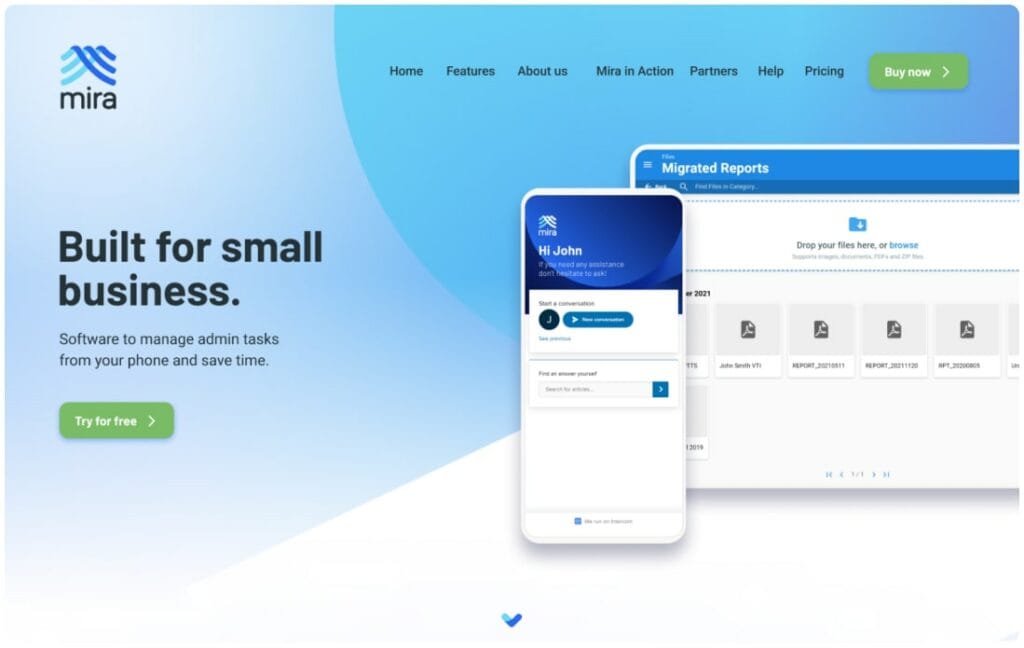
A corporate website for Mira, the flagship SaaS platform, delivering innovative tracking solutions to enhance asset management and operational efficiency across industries.
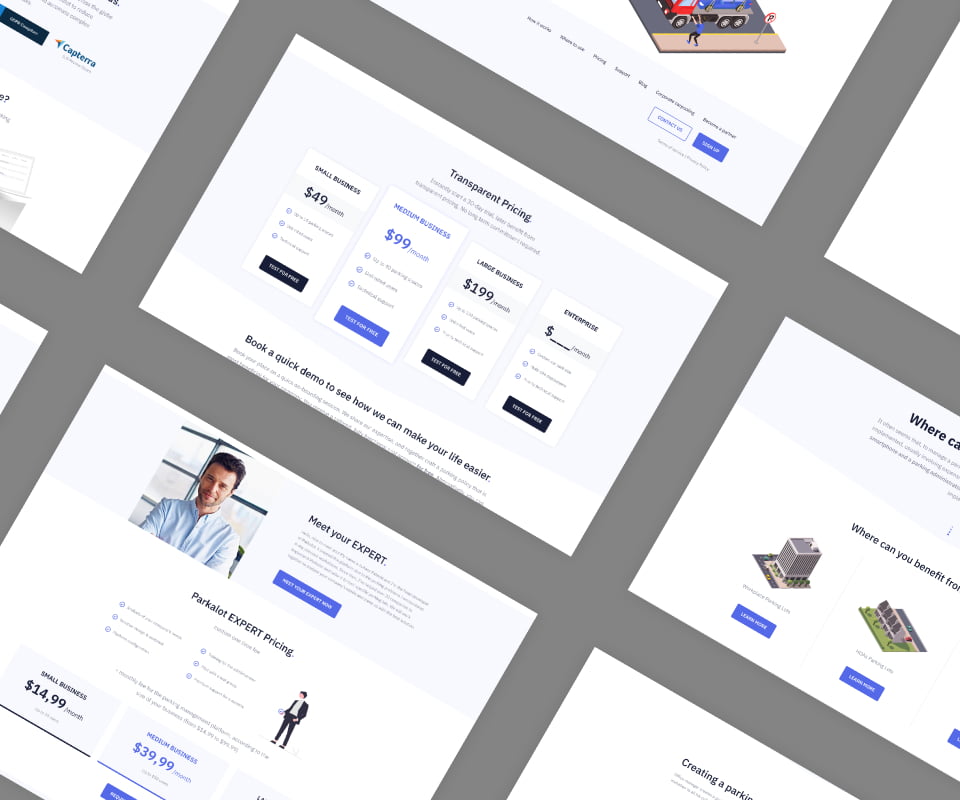
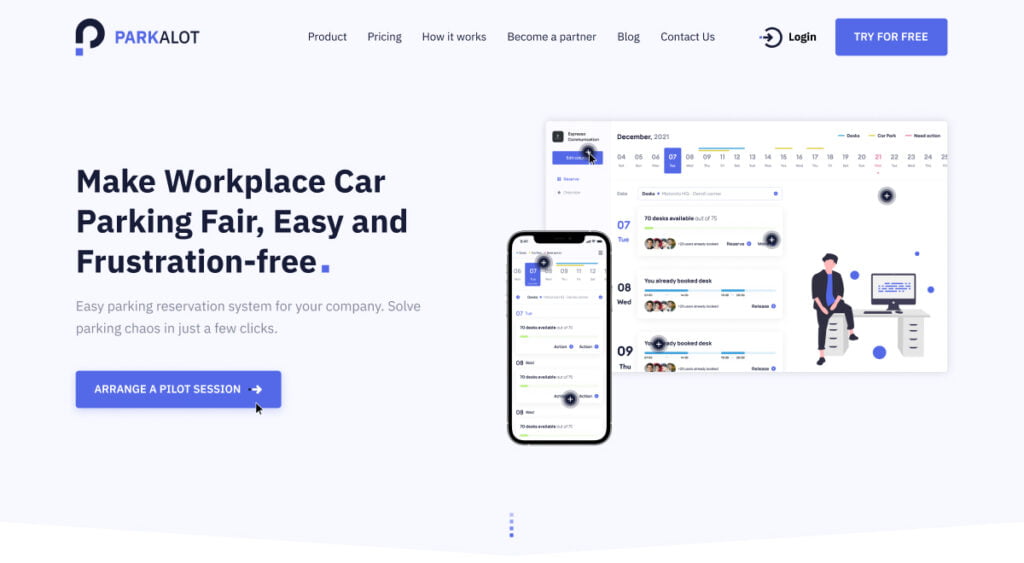
Parkalot is a Polish startup focused on making parking effortless and stress-free. The platform allows users to easily find and book available parking spots near business centers, office buildings, and busy urban areas in just a few clicks.
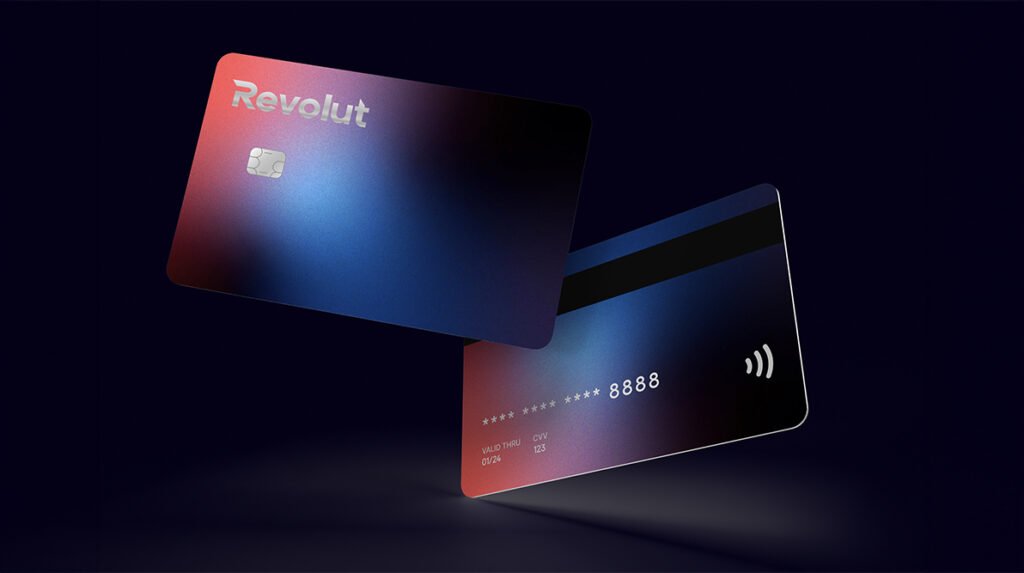
Revolut's new identity transforms global presence into market dominance. A dynamic logo paired with visual system drives instant recognition, builds unshakable trust, and delivers maximum impact at every touchpoint.




At IT Monks, we take a comprehensive approach to SaaS web design services, ensuring your digital brand identity is displayed consistently across every website element. Partnering with our qualified team of web design, development, and marketing experts guarantees exceptional results that elevate the brand and drive business success.
We specialize in designing websites for SaaS businesses, focusing on user engagement, conversion rates, and overall customer satisfaction. Websites convert visitors into paying customers with conversion-focused layouts, intuitive navigation, seamless interactions, and clear CTAs.
Our team specializes in developing websites for SaaS projects, focusing on high-performance architecture, scalability, and third-party integrations. Websites are designed to look exceptional, highlight product benefits, and adapt effortlessly to a growing user base and evolving market trends.
We provide a comprehensive approach to supporting and optimizing SaaS websites. Our maintenance service includes regular updates, performance monitoring, database optimization, security assurance, and eliminating technical errors.
We enhance SaaS website search engine visibility. As part of the website SEO service, strategies and tools are implemented to improve rankings in SERPs, drive organic traffic, and attract more users to discover the SaaS solution through search queries.

The price of SaaS web design varies from $15,000 to $150,000+, depending on product complexity and scope, feature set, UI/UX design, tech stack, integrations, security, and compliance.
Developing a simple to moderately complex SaaS website typically takes 5 to 10 months. However, creating complex SaaS solutions or enterprise-level SaaS platforms requires additional time. The timeline depends on the project’s specific requirements and scope. For a tailored estimate, feel free to contact us.
Unlike traditional web design, which prioritizes aesthetics and general usability, SaaS web design primarily focuses on converting users into leads. Traditional web design focuses on UX, typically designed for standard performance requirements. SaaS web designs are crafted based on detailed user journeys and funnels, featuring complex functionalities optimized for scalability.
Yes, the IT Monks team ensures seamless integration of custom APIs and third-party tools like payment gateways, CRM systems, and marketing automation to enhance your SaaS website’s functionality and streamline operations.
Yes, we design all our SaaS websites following the WCAG (Web Content Accessibility Guidelines) and featuring elements like keyboard navigation, screen reader compatibility, and color contrast optimization to ensure all users, including those with disabilities, can access your site.
We ensure SaaS website scalability by designing it using modular architecture and scalable technologies to handle increasing traffic, user loads, and feature expansions.

 ChatGPT
  Claude
  Grok
Grok  Gemini