Explore our specialized services, tailored solutions, and industry expertise to elevate your digital presence. From custom WordPress development to seamless integrations, we build high-performing websites that deliver impact.
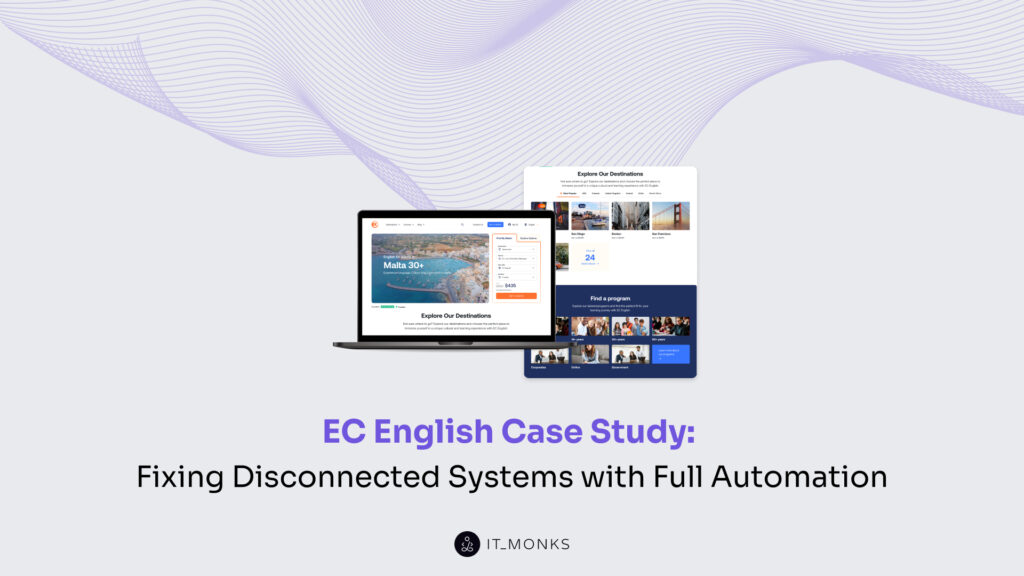
We’ve seen this situation more times than we can count, and it’s exactly the kind of issue we recently came across while working with EC English. On the surface, everything looked fine: the website was live, forms were coming in, bookings were happening, and traffic numbers seemed healthy. But once we started looking at how all of that connected to actual sales and operations, the gaps became obvious pretty quickly. That’s what this EC English case study is really about.
A Website Without Connections Is Just Sitting There
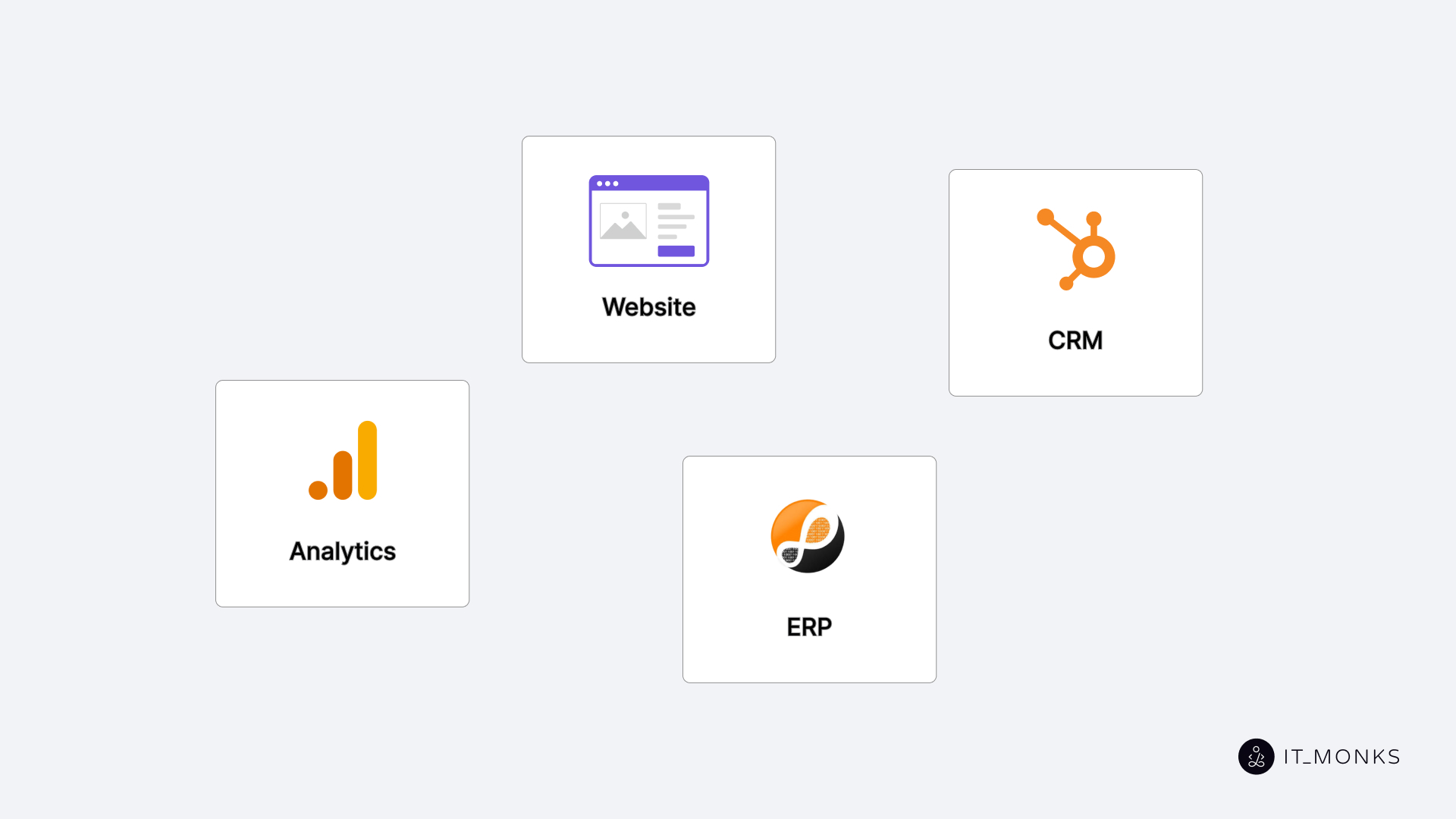
A website on its own doesn’t do much beyond collecting inputs. It might look good; it might convert at some point, but if it’s not integrated with the rest of the tools, it’s mostly isolated.
You’re not getting proper insight into user behavior. You don’t see the full journey. Data lives in different places, and no one fully trusts it because it never quite matches across systems.
Over time, this turns into wasted effort. Teams start double-checking things, manually moving data, or just ignoring certain gaps because fixing them feels harder than working around them.
At that point, the website stops being useful as a system. It’s just a front layer.
How a Website Is Supposed to Work with Other Tools
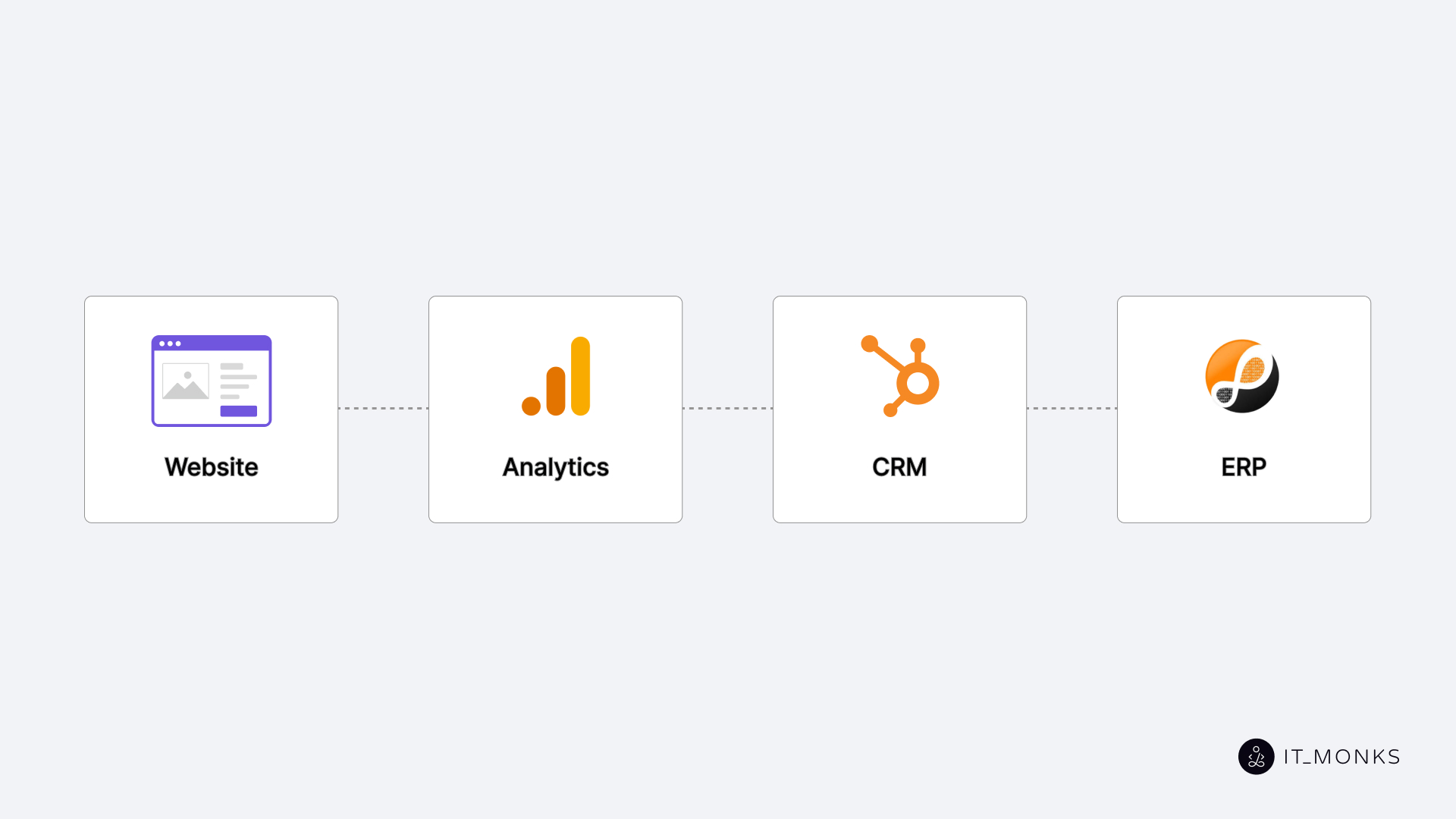
In a setup that actually works, the website sits in the middle and connects everything else.
It feeds data into analytics so you understand what’s happening.
It pushes user information into a CRM so leads and customers are tracked properly.
It connects to ERP systems so operations reflect what users are actually doing.
When these connections are in place, information doesn’t need to be chased down. It just flows.
Website vs Regular Analytics
Analytics platforms are usually the first thing companies connect to a website. That gives visibility into traffic sources, user behavior, conversion paths, and drop-off points. You can see which pages users visit before submitting a form or entering a booking flow.
But analytics alone only explain behavior. It doesn’t connect those actions to actual customer records or operational outcomes.
Website vs CRM
CRM integration closes that gap. Once the website is connected to a CRM, interactions stop being anonymous events and become structured customer records. Form submissions create leads automatically. User actions can trigger follow-ups, segmentation, and lifecycle updates.
Without that connection, sales teams often work with incomplete or delayed information.
Website vs API/ERP
ERP systems handle the operational side of the business: bookings, transactions, records, internal processing.
That data needs to move automatically from the website into the ERP through API integrations. Otherwise, teams end up manually transferring information between systems, which slows everything down and increases the chance of mistakes.
Where EC English’s System Fell Short
EC English already had the necessary systems in place. They had a global website, analytics tracking, HubSpot, and Konnect. The issue wasn’t missing software. The issue was that the systems weren’t communicating properly with one another.
The website and analytics were connected, so marketing had partial visibility into traffic and user behavior. But HubSpot and Konnect were functioning independently from the website.
That created a fragmented process.
Lead information wasn’t consistently flowing into the CRM. Booking activity wasn’t fully synchronized with operational systems. Attribution data was incomplete, and teams had to rely on manual handling in places where the flow should have been automatic.
The disconnect became even more noticeable during the booking process itself. Users could move through multiple stages on the website, but depending on where they stopped, some of that information simply disappeared from the workflow.
At the same time, EC English was regularly launching landing pages for paid campaigns across different markets. And that created another issue. Not only did setting up and managing those flows take a lot of manual work, but there was also hesitation around scaling campaigns aggressively because every increase in lead volume meant more manual processing for the internal team. Instead of the system helping them handle growth, the operational side became a bottleneck whenever campaigns started performing well.
Fixing the Flow Instead of Adding More Tools
When we started working on the redesign, the focus wasn’t just on visuals or structure. The bigger goal was creating a connected system where information moves automatically from one platform to another without gaps.
The website needed to become part of the operational infrastructure rather than acting as a standalone marketing tool.
Form Submissions and Lead Automation
The first step was restructuring how form submissions were handled. With Gravity Forms integrated into the system, the EC English team can now create and manage new forms on their own while keeping the same design consistency across the website.
At the same time, every form can be connected directly to a HubSpot feed with proper field mapping already in place. That means every submission made through the website is automatically sent into analytics while also creating a lead record inside HubSpot in real time.
Marketing and CRM data now stay aligned from the beginning. No manual exports, no re-entering information, and no delays between a user action and lead creation.
Tracking the Full Booking Journey
The booking flow required a deeper level of tracking. We redesigned the process to capture where users originally came from, which pages they visited before starting the booking flow, and how they progressed through each step.
The flow itself was separated into stages, including personal information and checkout. This became important because not every user completes the booking immediately.
If someone entered personal details but abandoned the process before payment, that information was still valuable. Instead of losing it, the system now sends those users into HubSpot as SQLs (Sales Qualified Leads), allowing the sales team to continue the conversation.
If the booking is completed, the process changes automatically. The CRM status updates from lead to customer, and the booking information is synchronized directly with Konnect through the API connection.
At that point, the operational team already has the data they need without having to request or transfer anything manually.
What Changed After the Systems Were Connected
The biggest improvement wasn’t just speed, although the workflows became significantly faster.
What really changed was visibility.
Marketing could finally connect campaigns to actual bookings. Sales teams could see incomplete booking attempts and follow up before losing potential customers. Operational data remained automatically synchronized across systems.
The website stopped acting like an isolated platform and became part of a continuous process shared across teams.
That shift tends to reduce friction more than expected because people stop spending time trying to bridge gaps between disconnected tools.
In a Nutshell
EC English is a good example of how disconnected systems quietly create inefficiencies over time, even when every platform works individually. Once the website, CRM, analytics, and ERP started functioning as one connected system, the operational overhead dropped significantly, while the business itself became easier to scale.
After the redesign and automation work, EC English saw:
37% increase in organic traffic
16% improvement in conversion rate
28% growth in course booking
At the same time, the overall ROI increased by 136%, largely because the team no longer had to rely on manual lead handling and disconnected workflows to manage growth.
Sometimes the biggest improvement isn’t adding something new. It’s making the existing systems finally work together.




 ChatGPT
  Claude
  Grok
Grok  Gemini