Blog

WP Development

Build powerful, high-performing WordPress websites with expert coding tips, custom development techniques, and best practices. Learn how to extend WordPress functionality like a pro.

WP Development

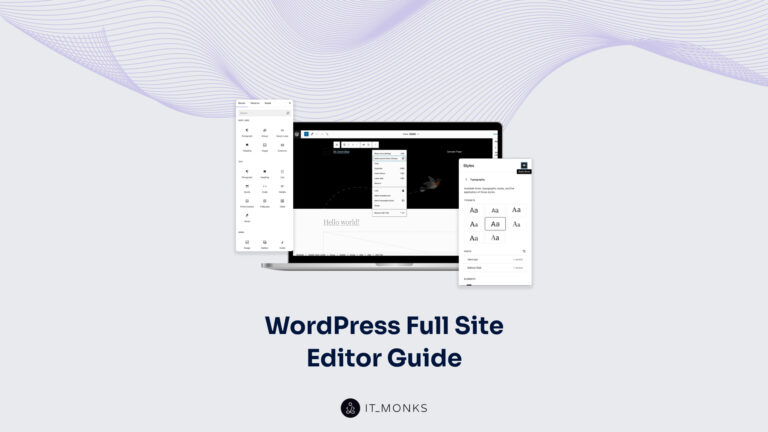
WordPress Full Site Editor: Complete Guide

WordPress Full Site Editor provides a block-based environment for managing every visual and structural aspect of a WordPress site. It enables the management of structure and design without constantly switching contexts. The editing system connects templates, global styles, navigation menus, and page content into a single interface where headers, footers, and layout structures are built […]
WP Development

WordPress User Management: Complete Guide

WordPress user management is a system that controls user roles and permissions, i.e., who gets access to your website’s admin dashboard, what kind of account they use, and what they’re actually allowed to do after logging in. Some users publish content; some just write; others barely interact beyond viewing.  Over time, most sites move past […]

WP Development

WordPress Filter Hooks

WordPress filter hooks enable modification of values and output during theme and plugin execution. In development workflows, data passes through callback functions, where each can adjust the value and return it before it becomes part of the final result.  Filter hooks are a part of the WordPress hook system, which allows code to run or […]

WP Development

WordPress Action Hooks

WordPress action hooks connect themes, plugins, and custom functions to specific execution points, allowing custom functionality to run during site customization and maintenance.t  Action hooks work alongside filter hooks and use structures such as callbacks, priority, and arguments to organize code execution. This mechanism helps organize site functionality, control behavior, and keep WordPress implementation structured, […]

WP Development

WordPress Permalinks: Best Structure and Setup Guide

WordPress permalinks are the permanent links used to access a specific piece of content, such as posts and pages, on a WordPress website. They shape the content URL structure that connects each page address to its place in the website architecture, forming the link format that visitors and search engines use to reach a specific […]

WP Development

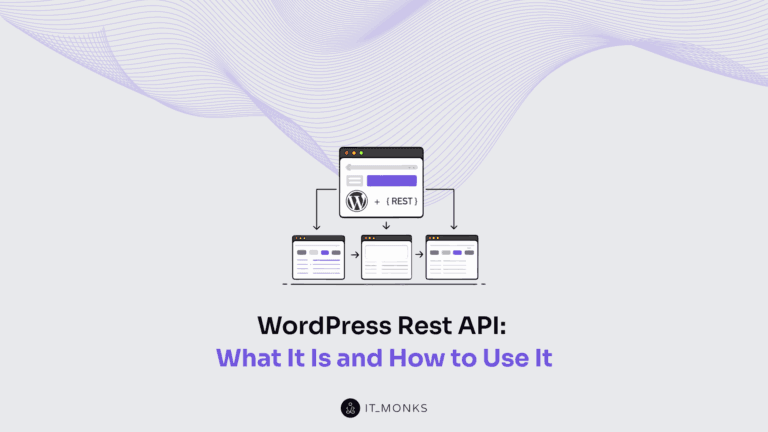
WordPress Rest API: What It Is and How to Use It

The WordPress REST API enables structured HTTP requests to retrieve, create, update, and delete WordPress data. The WordPress REST API works by exposing structured URLs that represent specific WordPress resources, such as posts, users, or media files. A route defines the URL pattern that identifies a set of related resources, for example, /wp-json/wp/v2/posts. An endpoint […]

WP Development

What is WordPress Integration?

WordPress integration is the process of connecting WordPress with external tools and systems so that data and actions remain consistent, reliable, and secure. Integration starts by defining system boundaries and ownership, which determine whether it runs inside WordPress as a plugin-based integration or outside WordPress as a third-party integration. That decision establishes the source of […]

WP Development

WordPress Multisite: Complete Guide 

WordPress Multisite defines one WordPress installation as the foundation for running multiple sites inside a single Multisite network. WordPress Multisite differs from a single site: a single site uses one installation for one website, while a Multisite network groups and manages multiple sites under a single shared structure within WordPress. That structural difference drives the […]

WP Development

A/A Testing: Guideline

A/A testing is a controlled experiment where 2 identical variants are compared to confirm that the testing setup works correctly across assignment, tracking, and caching. An A/A test looks for no real difference between variants, making it a validation method in its own right.  Teams use A/A testing during WordPress website development because frequent changes […]