Blog

WP Development

Build powerful, high-performing WordPress websites with expert coding tips, custom development techniques, and best practices. Learn how to extend WordPress functionality like a pro.

WP Development

Digital Content

Digital content is any form of information created, structured, and distributed in digital formats to communicate meaning, deliver value, or enable interaction across digital environments. It is commonly classified by type (such as text, image, video, audio, interactive, and multimedia) because each format encodes information differently and imposes distinct production requirements.  Digital content is produced […]
WP Development

Multivariate Testing

Multivariate testing (MVT) is an experimentation method used to measure how multiple design elements and their variants interact within a single test environment, enabling analysis of which combinations and interactions most effectively achieve a defined objective. Typical objectives include improving conversion rate, click-through rate, task completion rate, revenue per session, and interaction depth metrics such […]

WP Development

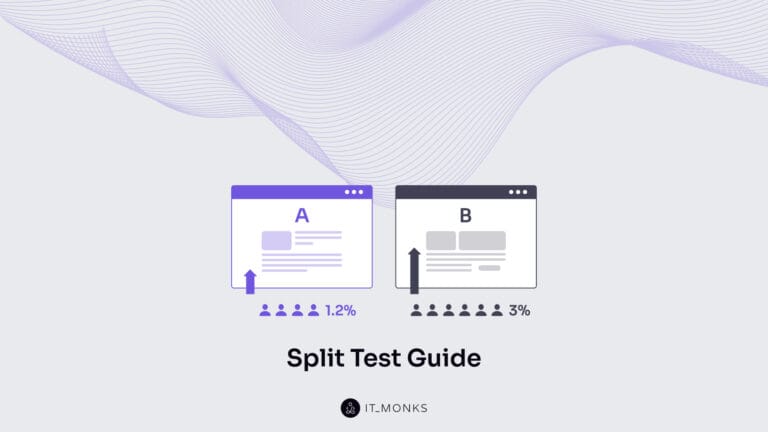
Split Test: Practical Guide

A split test is a controlled experimental method used to compare two or more variations of a single digital element to measure how a specific change affects user behavior to achieve predefined performance metrics. The test operates by dividing traffic between a baseline version (the control) and one or more modified versions (variants), ensuring that […]

WP Development

Web Analytics: Complete Guide

Web analytics is the practice of measuring and interpreting user behavior, content performance, and technical conditions across a digital platform. It provides a structured data layer that supports decision-making by converting interaction records, traffic attributes, and system outputs into actionable insights. In WordPress development workflows, web analytics integrates with event tracking, session measurement, and performance […]

WP Development

Progressive Enhancement in WordPress Design

A WordPress website adopting progressive enhancement establishes a layered rendering model that supports consistent delivery across devices, web browsers, and varying render capabilities.  The enhancement strategy sets semantic HTML as the baseline experience, applies CSS for presentation, and adds JavaScript only when the render context enables it, thereby preserving fault tolerance, supporting device independence, and […]

WP Development

Media Query Complete Guide

Media queries are the conditional CSS logic that adapts a WordPress website’s layout and styling based on viewport width, resolution, orientation, and user preferences.  Integrated through WordPress theme stylesheets or exposed in page-builder responsive controls, media queries determine how CSS rules react to breakpoints and configure adaptive behavior for navigation, typography, spacing, and component visibility.  […]

WP Development

Responsive Images in WordPress Web Development

A WordPress website uses a responsive image to adapt visual assets to screen resolution, pixel density, and layout width. This adaptation supports responsive web design by improving page speed, bandwidth efficiency, device compatibility, and visual rendering. A responsive image is stored in the WordPress media library as multiple size-specific variants. A WordPress site exposes these […]

WP Development

Responsive Web Design Best Practices for a WordPress Website

A WordPress website requires responsive web design so its layouts, Gutenberg blocks, navigation elements, and media assets adapt correctly to desktop, tablet, and mobile viewports. Responsive behavior depends on structured HTML containers, CSS breakpoints, media queries, and accurate mobile viewport settings, ensuring stable rendering and performance aligned with CLS, LCP, and INP. In WordPress, responsiveness […]

WP Development

Top 10 Examples of Website Color Schemes for WordPress

In WordPress design, a website color scheme establishes the visual system that defines how primary, secondary, and accent colors structure interface hierarchy across templates and block patterns. A color scheme represents the palette WordPress themes use to unify modular styling, responsive layouts, and block-level components within a consistent visual framework. The selected palette must meet […]