

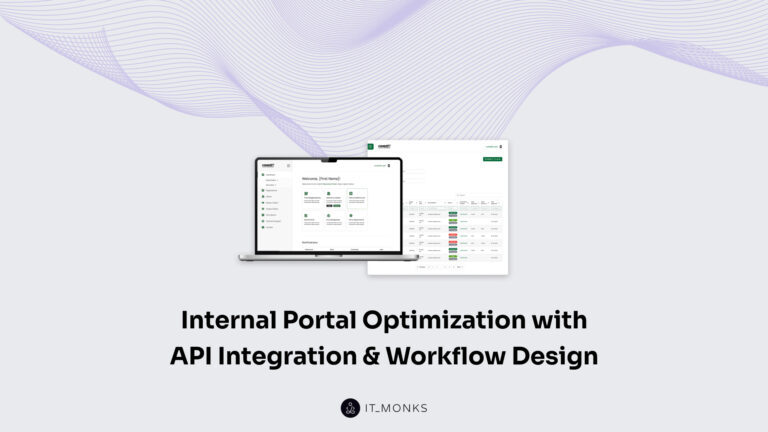
There’s a point where internal systems in day-to-day operations still “work,” but something feels off. This Combilift case study walks…
Learn more With over 16 years of experience, IT Monks delivers mobile-optimized, lead-driven, fast contractor websites built through structured, high-performance web design principles.






A static website might look good, but it does very little once someone actually reaches out.
Common problems:

Lead forms, calls, and inquiries are connected directly to the CRM, so every interaction is tracked in one place.
Automated workflows handle follow-ups, assign leads to the right people, and keep sales teams updated with real-time activity and source data.

A “Contact Us” page is rarely enough for construction leads. Many visitors are interested, but not ready to make a call yet. Without a clear estimate or quote process, those potential clients leave before taking the next step.

Multi-step quote forms help collect the right details upfront, including project type, budget range, timeline, and location. This gives sales teams better-qualified inquiries before the first conversation even starts.

Most construction companies already have satisfied clients, but that trust rarely shows up on their websites. Reviews are scattered across Google, Houzz, Facebook, and email threads, while new visitors land on the site with very little evidence that others had a good experience.

Reviews are collected and displayed in a more structured way across the website. Project pages, service pages, and homepage sections can automatically surface recent testimonials, ratings, and client feedback.

The product evolves, but the website often stays a few versions behind.
Messaging no longer clearly reflects the product, navigation feels dated, and the experience creates friction before users even reach signup.

The experience becomes clearer, easier to navigate, and more aligned with how the product works today.
Users move through key pages with less hesitation, understand the value faster, and reach signup or trial with stronger intent.

Construction websites usually rely on large visuals, including project galleries, drone footage, before-and-after sliders, and full-width hero sections. Without proper optimization, pages can take 8–12 seconds to load, especially on mobile.

Large media files are optimized without reducing visual quality. Image compression, lazy loading, and CDN delivery help pages load much faster, even on content-heavy project pages.
The result is a smoother browsing experience, lower bounce rates, and stronger search performance.

The product may solve real problems, but it still struggles to appear where people actually search.
Pages are not structured around real search intent, important topics are missing, and technical SEO issues continue to hold rankings back.

The process starts with reviewing how the site is structured, indexed, and crawled to identify what limits visibility. Technical issues are resolved, internal linking is strengthened, and pages are aligned with the way users actually search for solutions.

Construction companies often have strong completed work, but their websites don’t show it properly.
Common gaps:

Projects are organized into dedicated case-study style pages with photos, project details, materials, timelines, and outcomes. Visitors can filter work by service type, industry, or location to quickly find relevant examples.
A static website might look good, but it does very little once someone actually reaches out.
Common problems:
Lead forms, calls, and inquiries are connected directly to the CRM, so every interaction is tracked in one place.
Automated workflows handle follow-ups, assign leads to the right people, and keep sales teams updated with real-time activity and source data.
A “Contact Us” page is rarely enough for construction leads. Many visitors are interested, but not ready to make a call yet. Without a clear estimate or quote process, those potential clients leave before taking the next step.
Multi-step quote forms help collect the right details upfront, including project type, budget range, timeline, and location. This gives sales teams better-qualified inquiries before the first conversation even starts.
Most construction companies already have satisfied clients, but that trust rarely shows up on their websites. Reviews are scattered across Google, Houzz, Facebook, and email threads, while new visitors land on the site with very little evidence that others had a good experience.
Reviews are collected and displayed in a more structured way across the website. Project pages, service pages, and homepage sections can automatically surface recent testimonials, ratings, and client feedback.
The product evolves, but the website often stays a few versions behind.
Messaging no longer clearly reflects the product, navigation feels dated, and the experience creates friction before users even reach signup.
The experience becomes clearer, easier to navigate, and more aligned with how the product works today.
Users move through key pages with less hesitation, understand the value faster, and reach signup or trial with stronger intent.
Construction websites usually rely on large visuals, including project galleries, drone footage, before-and-after sliders, and full-width hero sections. Without proper optimization, pages can take 8–12 seconds to load, especially on mobile.
Large media files are optimized without reducing visual quality. Image compression, lazy loading, and CDN delivery help pages load much faster, even on content-heavy project pages.
The result is a smoother browsing experience, lower bounce rates, and stronger search performance.
The product may solve real problems, but it still struggles to appear where people actually search.
Pages are not structured around real search intent, important topics are missing, and technical SEO issues continue to hold rankings back.
The process starts with reviewing how the site is structured, indexed, and crawled to identify what limits visibility. Technical issues are resolved, internal linking is strengthened, and pages are aligned with the way users actually search for solutions.
Construction companies often have strong completed work, but their websites don’t show it properly.
Common gaps:
Projects are organized into dedicated case-study style pages with photos, project details, materials, timelines, and outcomes. Visitors can filter work by service type, industry, or location to quickly find relevant examples.
IT Monks is a web design company for contractors that understands the structure of the construction and trades niche. Our team develops industry-specific features that strengthen credibility, improve user experience, and increase conversion rates.
Contractor services require clarity. We structure service pages so visitors immediately understand scope, specialties, and capabilities, making it easier to qualify leads and speed up decision-making.
An online estimator reduces back-and-forth and filters high-intent prospects. IT Monks builds calculators tailored to the pricing logic of each trade, improving both user experience and internal efficiency.
Transformation visuals matter in construction. Our gallery modules present work quality, progress, and craftsmanship in a format that builds trust and shortens the path to an inquiry.
Instead of generic forms, we implement bid-focused CTAs placed exactly where decision-making happens. This approach increases the number of qualified quote requests and aligns with how contractors secure projects.
Clear service boundaries prevent irrelevant inquiries. Interactive maps show exact coverage zones, helping prospects quickly confirm availability before contacting the contractor.
Licenses, insurance, and certifications are essential credibility factors in this niche. We design structured credibility blocks that bring these proofs forward, reinforcing trust from the first interaction.
Reputation drives contractor selection. IT Monks builds testimonial modules that highlight real client experiences and emphasize reliability, communication, and project results.
Portfolios are often the deciding factor for prospects. We present completed projects with structured data, visuals, and key details so visitors can easily evaluate expertise and relevance to their needs.

For over 16 years, IT Monks has been building high-performance contractor websites shaped by the logic, workflows, and service structures of the construction industry.
With more than 90 completed contractor and trades projects, we understand how contractors operate, how clients make decisions, and what a website must communicate to drive results.
Each contractor website we create is custom-designed to clearly present services, build trust, and convert high-intent visitors into leads.
The IT Monks team provides tailored, high-quality contractor website development that supports business growth and strengthens market positioning for any construction or trade business.
General contractors need a platform that presents broad capabilities with clarity. As part of our web design service for contractors, we structure multi-service websites so decision-makers can quickly understand scope, experience, and project range.
Home builders rely on strong visual presentation and storytelling. Through IT Monks’ contractor-focused design approach, we highlight floor plans, portfolio sections, and craftsmanship details that influence buyer confidence.
Commercial construction requires a credibility-first digital presence. Our team designs websites that reflect compliance standards, project complexity, and B2B buyer expectations, essential factors in commercial contracting.
Remodelers benefit from clear service breakdowns and transformation visuals. Using our experience as a web agency working with contractors, we craft layouts that showcase before/after quality and convert visitors into project inquiries.
Roofing websites must support fast decision-making and strong local SEO. Within our contractor web development work, we emphasize service clarity, trust markers, and quote-request paths tailored for urgent roofing needs.
Electricians need strong credibility signals: licensing, safety compliance, and technical capability. As part of our work with tradesmen, we build websites where these details are emphasized and supported with clear service hierarchy and trust elements.
Plumbing services require direct, easy-to-navigate structure. We design plumbing websites that highlight emergency services, routine repairs, and service areas in a format built for quick action and high conversion.
HVAC companies depend on seasonal demand and system-specific expertise. Through our contractor website design process, we present maintenance plans, installation services, and equipment types in a way that supports both commercial and residential inquiries.




 ChatGPT
  Claude
  Grok
Grok  Gemini